
Étude
Short instrumental works designed to perfect a specific musical skill.

Didier Descouens · Public domain
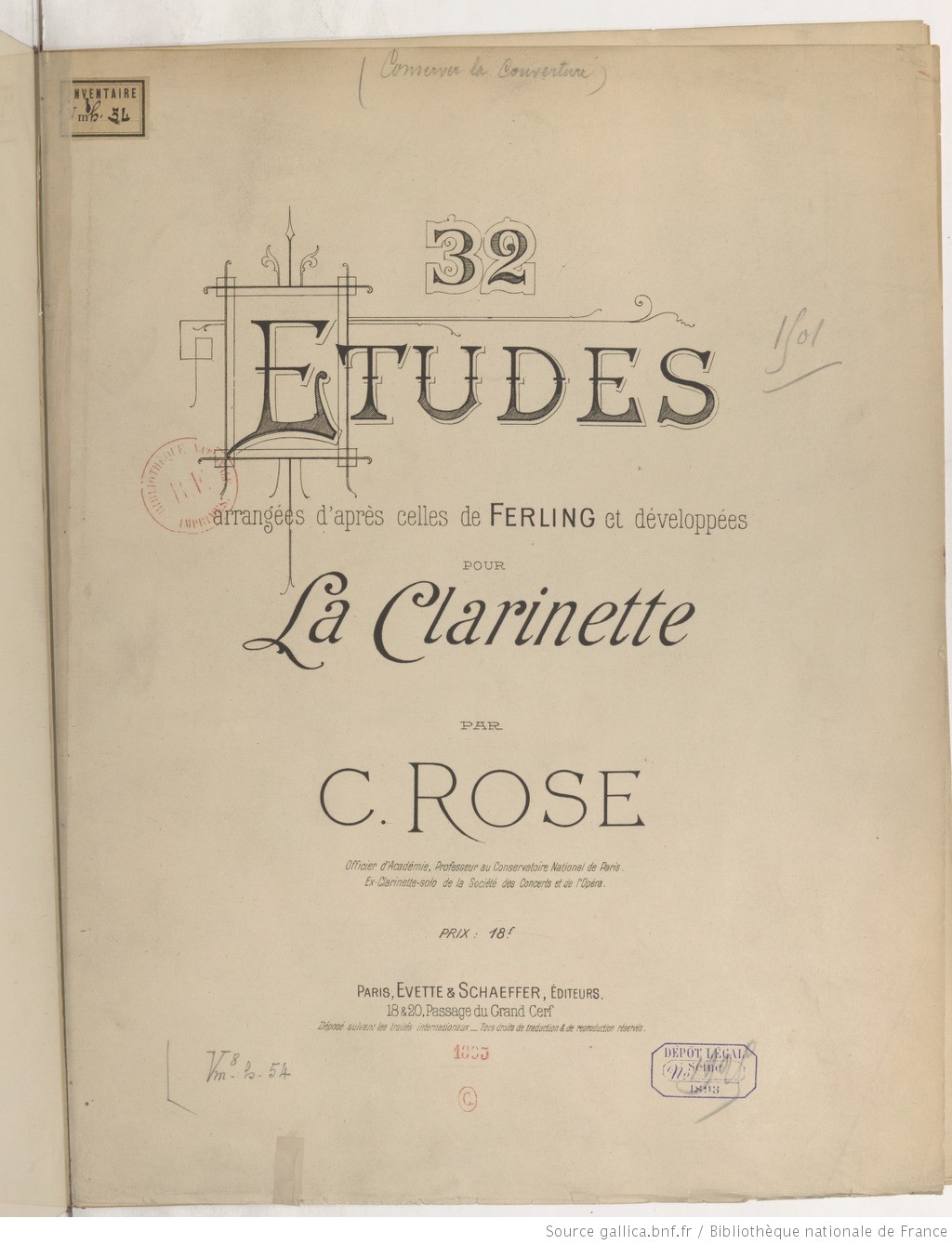
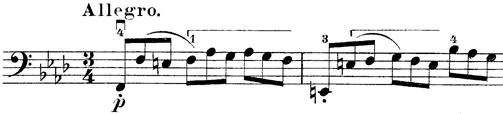
An étude (French: [e.tyd]) or study is an instrumental, usually short musical composition designed to provide practice material for perfecting a particular musical skill. The tradition of writing études emerged in the early 19th century with the rapidly growing popularity of the piano. Of the vast number of études from that era, some are still used as teaching material, and a few, by major composers such as Frédéric Chopin, Franz Liszt and Claude Debussy, achieved a place in today's concert repertory.
- field
- Music
- known_for
- Short instrumental compositions designed to perfect a particular musical skill
- era
- 19th century onward
Lore & Background
During the 19th century, it was quite popular for composers to write studies, with composer Howard Ferguson saying that 'almost every 19th-century pianist-composer wrote studies.' Studies, lessons, and other didactic instrumental pieces composed before the 19th century are extremely varied, without any established genres. The situation changed in the early 19th century, with instruction books and collections of studies by Johann Baptist Cramer, Muzio Clementi, Carl Czerny, Maria Szymanowska, and Ignaz Moscheles becoming common. Later, composers like Clementi and Moscheles began to create music that would both please audiences in concert and serve as a good teaching tool, a combination sometimes referred to as a concert study. The technique required to play Chopin's Études, Op. 10 and Op. 25 was extremely novel at the time of their publication; the first performer who succeeded at mastering the pieces was Franz Liszt. Liszt himself composed a number of études that were more extensive and even more complex than Chopin's, such as the collection Études d'Execution Transcendante. These did not retain the didactic aspect of Chopin's work, however, since the difficulty and the technique used varies within a given piece. The 19th century also saw étude collections for cello by Friedrich Dotzauer, Friedrich Grützmacher, and Sebastian Lee, and for guitar by Fernando Sor, as well as for flute by Ernesto Köhler, Wilhelm Popp, and Adolf Terschak.
Reader's Guide
The étude tradition, emerging in the early 19th century with the piano's rise, fundamentally shaped instrumental pedagogy and concert repertoire. While most études served as teaching material, a select few by major composers like Chopin, Liszt, and Debussy entered the concert repertory, blurring the line between exercise and art. The 20th century saw the tradition largely abandoned, with exceptions such as Claude Debussy's Études, which concentrated on sonorities and timbres, and György Ligeti's Études, which focused on particular techniques. John Cage's études were indeterminate pieces based on star charts and among the most difficult works in the repertory. For cello, David Popper's set of 40 études, Hohe Schule des Violoncello-Spiels, became arguably the most well known and widely used. The étude remains a vital form for developing technique and musical expression across instruments.
Did You Know?
- The tradition of writing études emerged in the early 19th century with the rapidly growing popularity of the piano.
- Frédéric Chopin's Études, Op. 10 and Op. 25 required extremely novel technique at the time of their publication.
- John Cage's études—Études Australes, Études Boreales, and Freeman Études—are indeterminate pieces based on star charts.
- David Popper's set of 40 études, Hohe Schule des Violoncello-Spiels, is arguably the most well known and widely used cello étude collection.
Gallery


Frequently Asked Questions
What is an Étude?
An étude (or study) is a short instrumental piece written to drill one specific technical or musical skill, such as finger independence, arpeggios, or voicing. The term is French, and although the pieces are brief, each one targets a focused exercise rather than just presenting a melody.
When did the Étude tradition begin?
The étude as a recognized genre crystallized in the early 19th century, riding the wave of the piano's rapidly growing popularity. Before that era, composers tended to embed technical exercises inside larger works instead of publishing standalone short studies.
Which composers are most associated with famous Études?
Frédéric Chopin, Franz Liszt, and Claude Debussy are the names fans most often cite when discussing concert-worthy études. Their pieces transcended the practice room and became fixtures of the modern recital program.
Are Études only for students, or do professionals perform them?
While they originated as teaching material, many études by major composers are now standard concert repertoire played by professional pianists. A single piece can therefore serve as a daily drill for a student and a showpiece on stage.
What separates an Étude from a regular short instrumental piece?
The defining trait is purpose: each étude is constructed around perfecting one particular musical skill, such as trills, octaves, or polyphonic voicing. A generic short piece might be purely melodic, whereas an étude has a clear technical goal baked into its design.
More in Music Theory & Composition 1-20
Spotted an error? Know more?
This is a living reference — every entry is fact-audited, and reader corrections feed straight into our audit queue. Suggest an edit · See this site's audit record